The Shade Review
The Price of Shade: Pool Cabanas and Spatial Class
By Elena Rostova | June 5, 2026 | 12 min read
The swimming pool deck at a luxury casino resort is a microcosm of class dynamics. While the water itself is shared, the surrounding lounge environment is divided by architecture and pricing into distinct social zones.
The Pool Chair Scramble
At the Grand Horizon Resort, the main pool deck is a vast, sun-drenched terrace that can accommodate hundreds of guests. The layout features rows of public lounge chairs arranged closest to the water. These seats are free for hotel guests, but they are subject to a competitive early morning rush. Guests arrive at 7:00 AM to place towels on the best chairs, a routine that creates friction and noise, establishing a crowded, high-volume environment.
This high-density lounging area is active throughout the day. The noise of splashing water, children playing, and portable music players creates a loud, chaotic background soundscape. Service is slow; guests must flag down passing pool servers who manage large sections of the deck, or stand in line at the central pool bar. This environment is structured for volume, catering to the average traveler who accepts the crowd as part of the resort experience.
The Cabana Sanctuary and Paid Distance
In contrast to the crowded pool deck, the private cabanas are positioned on elevated wooden decks along the terrace's margins. These cabanas—costing between five hundred and twelve hundred dollars a day depending on the season—are private wood-frame pavilions wrapped in light linen drapes. They feature cushioned lounge sofas, ceiling fans, mini-refrigerators stocked with complimentary drinks, flat-screen televisions, and personal attendants who handle food and beverage orders.
This layout creates a physical and visual boundary. The elevated deck places cabana guests slightly above the public lounge crowd, and a row of tall palm trees and frosted glass panels blocks the view of the main pool deck, absorbing sound and creating a private space. The cabana is a status symbol, signaling that you have paid to avoid the crowd and secure personal comfort in a highly controlled environment.
Public Loungers
Pricing: Included in the resort fee (first-come, first-served).
Environment: High-density, noisy, directly exposed to pedestrian walkways and pool activity.
Amenities: Towel desk access, shared pool bar service, shared umbrellas.
Private VIP Cabanas
Pricing: $500 - $1,200 / Day (prior reservation required).
Environment: Low-density, quiet, separated by plants, drapes, and wooden partitions.
Amenities: Dedicated server, ceiling fan, TV, fridge, fresh fruit platters, custom cushioned lounges.
The Commodification of Shade
In desert resorts, shade is a valuable resource. With summer temperatures regularly exceeding one hundred degrees and a high UV index, direct sun exposure is uncomfortable, making shaded space highly desirable. The resort manages this demand by charging a premium for shade. By restricting umbrellas on the main deck and charging high rates for cabanas, the property turns shade into a premium commodity.
This model is highly profitable. The revenue generated from cabana rentals during the summer months offsets the cost of maintaining the pool complex, allowing the resort to offer lower room rates during the week. For the traveler, this layout highlights the trade-offs of the mega-resort: you can enjoy a massive, beautifully maintained pool complex at a low room rate, but securing a quiet, shaded space requires an additional financial investment.
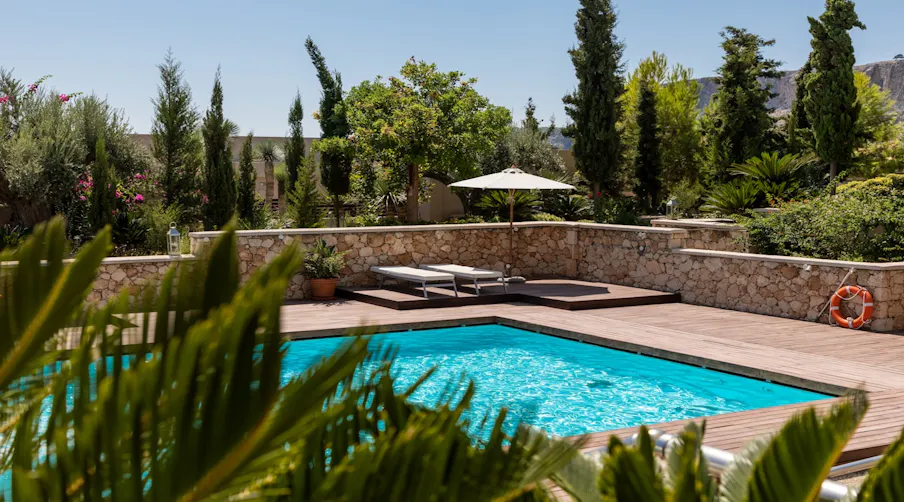
The architecture of privilege: elevated wooden decks and row of palm trees isolate VIP cabana guests from the crowded public pool deck.
"The pool deck is where the resort's social layers are most visible. The lounge chair is a seat; the cabana is a private room, purchased to avoid the crowd."
In conclusion, the resort pool deck is a highly structured social space. By dividing the terrace into high-density public areas and exclusive private cabanas, the property manages different guest budgets and preferences simultaneously. Understanding this layout allows travelers to appreciate how the resort uses design and pricing to turn outdoor space into a major revenue driver while maintaining a premium aesthetic.
© 2026 The Shade Review. Pool Sociology Studies.